REVIEWED ON:


What Language Do They Speak in Peru?
Would you like to explore Peru and visit Machu Picchu, but are unclear about some important aspects of your trip? Maybe you are wondering what language is spoken in Peru, where is the best place to stay or which is the ideal travel agency for your adventure. Well, in this blog we will focus on revealing what language do they speak in Peru? So that when you visit Peru you will be prepared.
The official and most spoken language in Peru is Spanish, although indigenous languages such as Quechua and Aymara are also recognized, especially in regions such as Cusco and surrounding areas, where Machu Picchu is located. Knowing the predominant language will help you make the most of your experience and connect with the local culture!
The main language spoken in Peru
The official and most widely spoken language in Peru is Spanish. Approximately 82% of Peruvians use Spanish as their main language. Introduced during Spanish colonization in the 16th century, it became the dominant language for communication, government and education.
However, 15% of Peruvians also communicate in a language other than Spanish. Among these languages, Quechua, the ancient language of the Incas, is the second most spoken, representing 13% of native speakers. It is followed by Aymara, spoken by 2% of the population, especially in the Altiplano, near the Bolivian border. In addition, approximately 3% of the population uses indigenous Amazonian languages.
Types of Spanish in Peru
Although Peruvian Spanish follows the standard grammar, it has its own distinctive features and regional variations:
Coastal Spanish:
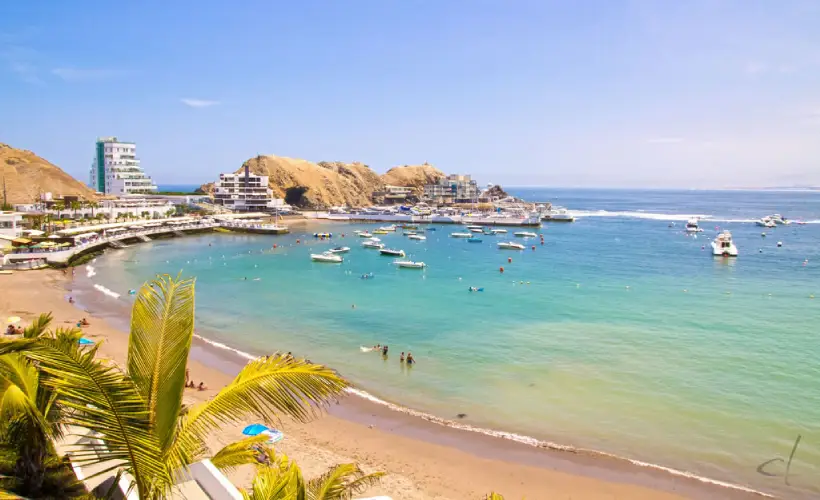
Predominantly along the Coast of Peru such as the city of Lima, it is characterized by a clear pronunciation and a fast rhythm. It also shares some characteristics with Andean Spanish, such as the tendency to soften the “s” at the end of words (e.g., “mismos” can sound like “mismo’”), and coastal Spanish is distinguished by a pronounced “rr” (as in “perro”).
In addition, coastal speakers, like many in Latin America, practice yeísmo, where the “y” and “ll” sounds are pronounced the same. For example, “pollo” and “apoyo” sound similar. There is also a mixed variant known as Andean-Coastal Spanish, which combines elements of both regions, such as Andean intonation with the clearer pronunciation of the coast.
Andean Highlands:
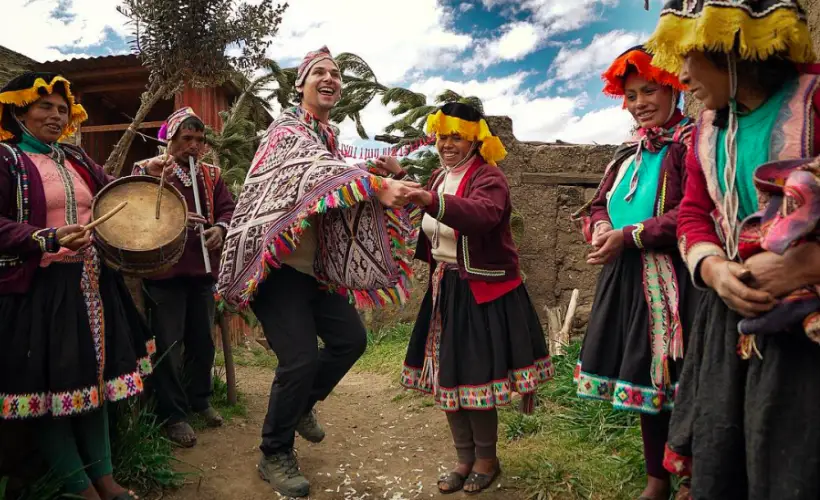
Spoken in regions such as Ancash, Ayacucho, Cusco and Puno, it is a rich mixture of Spanish and indigenous languages such as Quechua and Aymara. This dialect is distinguished by a clear pronunciation of syllables, a sharp intonation at the end of sentences and the use of linguistic borrowings. For example, Quechua words and structures influence expressions such as the double possessive: “Su casa de Renata” instead of “La casa de Renata”.
In addition, this Spanish retains features common in Latin America, such as seseo (the “s” and “z” sound the same) and the softening of the final “s” in some words. However, it stands out for merging vowel sounds and reflecting the typical intonation of Quechua. This variety is spoken in the Andean region from Ecuador to Bolivia, and even in parts of Colombia and Chile, showing the deep connection between the Spanish language and indigenous cultures.
To explore Andean Spanish is not only to discover a language, but also the cultural roots that shape it.
Amazon Rainforest:
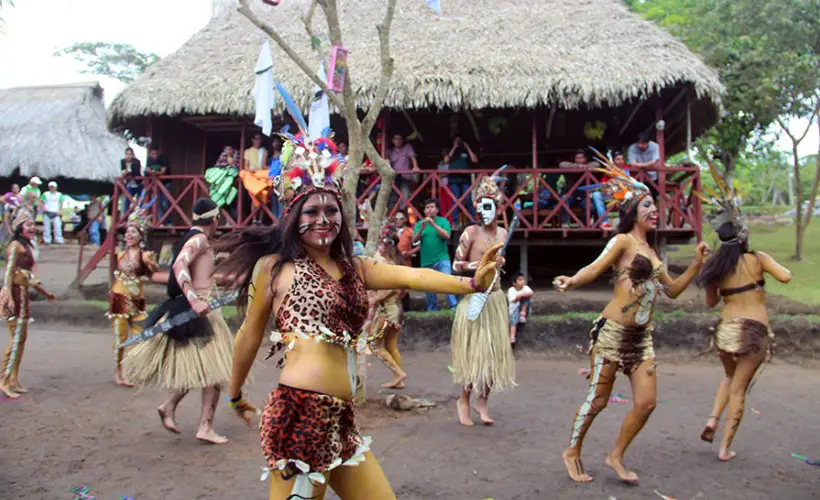
Spoken in the Amazon region of Peru, located east of the Andes and crossed by the majestic Amazon River, it is home to a Spanish influenced by the indigenous languages of the jungle. This dialect, known as Amazonian Spanish, is characterized by incorporating many terms borrowed from local languages and by peculiarities such as pronouncing the “x” with a sound similar to “f”.
Peruvian slang:
Additionally, Peruvians use a vibrant set of local slang, or “jerga,” in everyday conversation. Some common examples are:
- > Chévere: Cool or genial.
- > Jato: House.
- > Chamba: Work.
- > Calato: naked
- > Palta: shame
- > Tombo(a): policeman
- > Huasca: drunk
- > Wawa: baby (highland Spanish)
- > Alalau: how cold
- > Huambrillo: baby (jungle Spanish)
- > Sherete: in love (jungle Spanish)
- > Que piña: bad luck
Why does Peru have so many native languages?
Peru’s incredible linguistic diversity is the result of its geographical and cultural variety. While on the coast most are monolingual, speaking exclusively Spanish. The Amazonian highlands and jungle present a great variety of indigenous and native languages due to geography, as these languages originated and were preserved in rural and remote areas of the country.
In the Andes, the most important native languages are Quechua, Aymara, Jaqary and Kawki. In contrast, the Amazon region is characterized by great linguistic diversity, with Asháninka and Aguaruna being the most widely spoken indigenous languages. It is estimated that more than 105,000 people speak indigenous languages other than Quechua and Aymara, especially in the Amazonian regions of Ucayali, Madre de Dios and Loreto, located in the north and east of the country.
Bonus fact:
More than 300 indigenous languages used to exist in Peru. Today, about 47 are still spoken, while many others have been lost due to colonization and modernization.
More than 300 indigenous languages used to exist in Peru. Today, about 47 are still spoken, while many others have been lost due to colonization and modernization.
Quechua: The language of the Incas
Quechua, recognized as one of Peru’s official languages along with Spanish, is spoken by approximately 13% of the population. This language, inherited from the Inca civilization, remains fundamental in the Andean regions. Today, Quechua is actively used in many communities and is taught in some schools as part of efforts to preserve its cultural heritage.
Although Quechua lacks a traditional writing system and has sounds that can be difficult for non-speakers to pronounce, it managed to survive the arrival of the Spanish, who tried to eradicate it. In cities like Cusco, Quechua is still an essential part of everyday life. There, many people not only speak and practice the language, but also consider it a key element of their identity and cultural heritage.
However, in large cities, ancient traditions, such as Quechua, can be seen as outdated due to globalization and a Quechua speaker may suffer discrimination, as it is associated with poverty and lack of education.

Aymara: a language of the Altiplano
Aymara is a language spoken in southern Peru, especially near Puno and Lake Titicaca, and also in northern Bolivia and Chile, with around three million speakers. Although it is the third most spoken language in Peru, only a small percentage of the population (between 1.7% and 2%) uses it. The language has a complex history, originating from symbols representing people and objects, and although attempts were made to write it in a standardized way, this was only achieved in the last ten years.
Although similar to Quechua, Aymara has notable differences, such as a unique pronunciation and three vowel sounds, which are sometimes omitted in speech. It also uses suffixes to describe family relationships. In addition, the concept of time in Aymara is very peculiar: they see it as a line passing over the world, describing the past as something near and the future as something behind them, according to their perspective.
Although Aymara remains an important language in the Andean regions of Peru, Bolivia and Chile, its use is in decline, especially in the cities, where it is associated with rural areas and the indigenous population. Despite efforts to preserve it, Aymara faces challenges in its preservation, but it remains an essential part of the culture in these areas.

The lost languages of Peru
The loss of indigenous languages is often due to lack of documentation and efforts to assimilate native populations into Spanish-speaking culture. However, organizations and scholars are working to revitalize endangered languages through education and preservation programs.
Currently, it is estimated that 40 languages have been lost and all of them are indigenous, at this very moment others are in danger of extinction. These are some of the dead languages of Peru:
- > Aguano
- > Andoa-shimigae
- > Cahuarana
- > Culle
- > Puqina
- > Waripano
- > Cahurano
- > Hibito
- > Chimú languages
- > Omurano
- > Tequiraca
- > Chachapoyan Quechua
How language reflects Peru’s culture
Peru’s multilingualism is not just a matter of communication: it is a window into its history and identity. Each language carries traditions, stories and knowledge that have been passed down from generation to generation. For example:
- > Quechua songs often celebrate agricultural cycles and nature.
- > Aymara myths reflect the spiritual connection between humans and the environment.
Frequently Asked Questions
1. Is English spoken in Peru?
Yes, you will find that many people working in the tourism sector speak between two and three languages, including English. However, not everyone is fluent in English; some have an intermediate level. Therefore, it is advisable to use common words and avoid complex terms if you want to communicate effectively with native speakers.
2. Do you speak English at Cusco Lodge Hotel Boutique?
Yes, almost all of our staff speaks English and Spanish, so you can feel free to stay with us when you visit Cusco. We will take care of every detail of your stay so that you have a perfect trip.
3. Is it necessary to learn Spanish to visit Peru?
Yes, it is advisable to learn some basic Spanish phrases in case you have to interact with non-English speakers. This will not only facilitate communication, but can also be of great help in case of an emergency or unforeseen situation.
In addition, showing interest in the local language is a way to better connect with the culture and gain the sympathy of the locals.
4. What other indigenous languages are spoken in Peru besides Quechua and Aymara?
There are 52 native Peruvian languages other than Quechua and Aymara, some of them are Ashaninca, Shipibo Conibo, Aguaruna, Machiguenga, Achuar, Mayoruna and Bora.
5. Can I find tour guides who speak Quechua or Aymara?
Yes, in Cusco there are tour guides who speak both Quechua and English. If you plan to book with a travel agency, it is important to let them know your request so that they can offer you a tour tailored to your needs.
On the other hand, if you want an Aymara-speaking guide you can find one by visiting places like Puno.
6. If I don’t speak English can I do a tour in Peru?
Yes, if you speak Italian or another language other than English, you can ask your agency to assign you a guide who speaks your native language. Many agencies are able to find suitable guides to ensure that you enjoy a more personalized and comfortable experience during your visit.
7. Are there schools or resources to learn Quechua or Aymara as a tourist?
Yes, if you wish to learn more about the native languages, you can participate in volunteer programs in the cities of Cusco or Puno. These experiences will allow you to interact with the local communities in a more natural way, giving you the opportunity to learn both their languages and culture in an authentic and close way.
In addition, some volunteer programs offer incentives such as trips to tourist sites in Cusco.
8. Is it common to hear indigenous languages in big cities like Lima?
No, due to discrimination in metropolitan cities like Lima, it is not common to hear people speak in their native languages. However, in cities like Cusco, Puno and some jungle locations, it is more common to hear people communicate in both their native languages and Spanish, as these regions value and preserve their cultural traditions more.
9. What words or phrases in Quechua or Aymara should I learn as a visitor?
As a visitor, learning some basic words and phrases in Quechua or Aymara can enrich your experience and facilitate interaction with local communities. Here are some useful ones:
In Quechua:
- – Allillanchu (Hello, how are you?)
- – Añay (Thank you)
- – Rimaykullayki (Nice to meet you)
- – Tupananchiskama (See you later)
In Aymara:
- – Kamisaraki (Hello, how are you?)
- – Jilata (Brother)
- – Waliki (I’m fine)
- – Jutirincama (See you later)
These phrases show respect for the local culture and will help you better connect with the people during your visit.
So, what language is spoken in Peru? While Spanish is the primary language, the country’s rich linguistic diversity includes Quechua, Aymara, and many indigenous tongues. This blend of languages reflects Peru’s deep cultural roots and regional variety, making it a truly unique destination.
If you’re planning a visit, take the opportunity to learn a few words in Quechua or Spanish slang—it’s a great way to connect with the locals and appreciate Peru’s fascinating heritage!